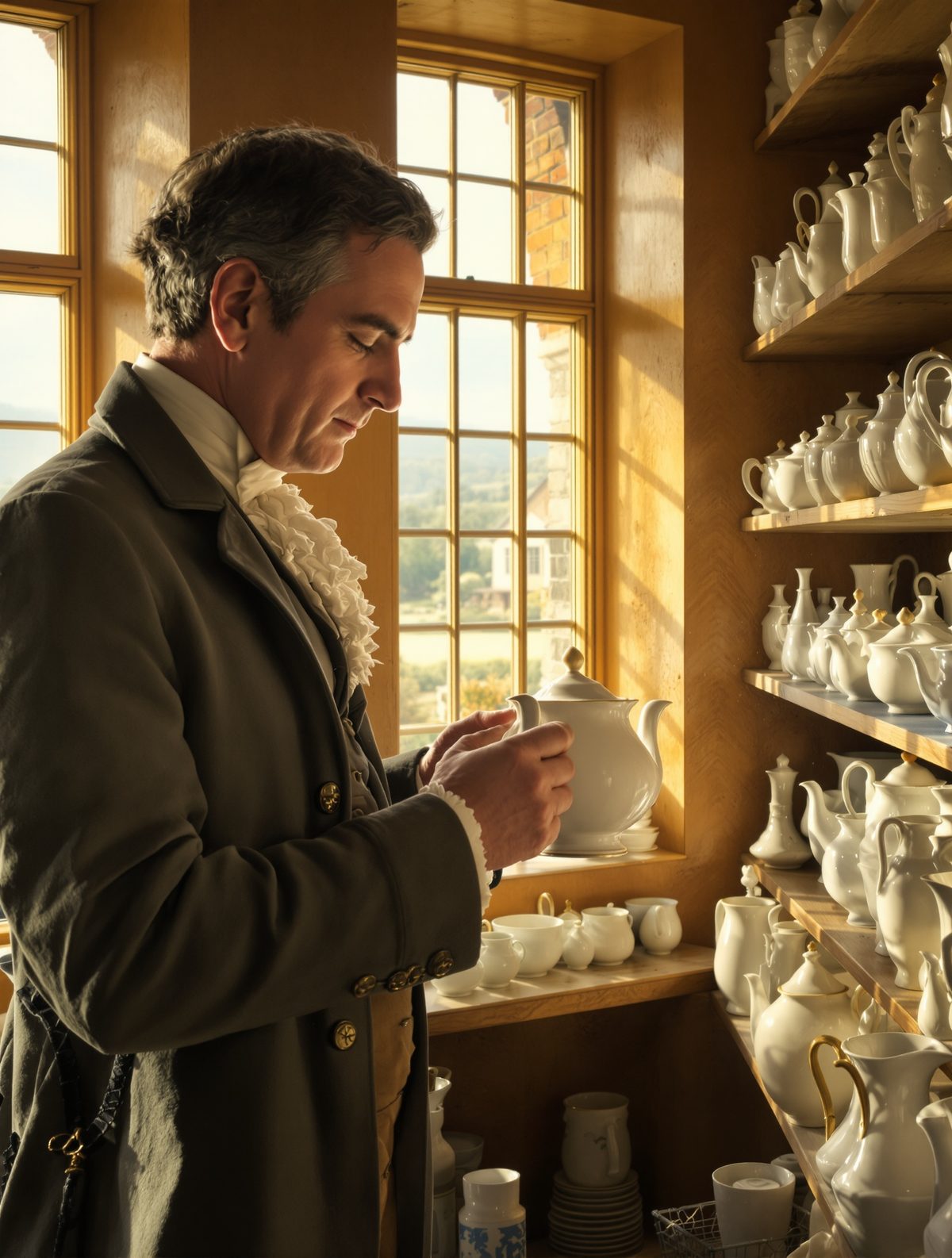
Picture this: It's a crisp morning in 1765, and a messenger arrives at a modest pottery works in Burslem, Staffordshire, bearing the royal seal. Inside the workshop, clay dust hangs in the air like golden motes, and the steady rhythm of potter's wheels creates an almost hypnotic hum. The message is brief but earth-shattering: Her Majesty Queen Charlotte desires a complete tea service in that remarkable cream-colored ware she's heard whispered about in the drawing rooms of London. In that single moment, a humble potter named Josiah Wedgwood didn't just receive a royal commission—he accidentally invented the very concept of the luxury brand.
What happened next would transform not just British pottery, but the entire notion of how desire, status, and commerce could intertwine. Within months of that royal order, every aristocrat in Europe would be clamoring for their own set of "Queen's Ware," and a revolution in marketing and luxury consumption would be born.
The Accidental Genius of Etruria
Josiah Wedgwood wasn't born to greatness—he was born to clay. The thirteenth child of a Staffordshire potter, he should have followed the well-worn path of his family trade, throwing simple earthenware pots for local farmers and housewives. But fate, in the form of a childhood bout of smallpox that left him with a weakened leg, had other plans. Unable to work the potter's wheel with the same vigor as his brothers, young Josiah was forced to think rather than simply throw.
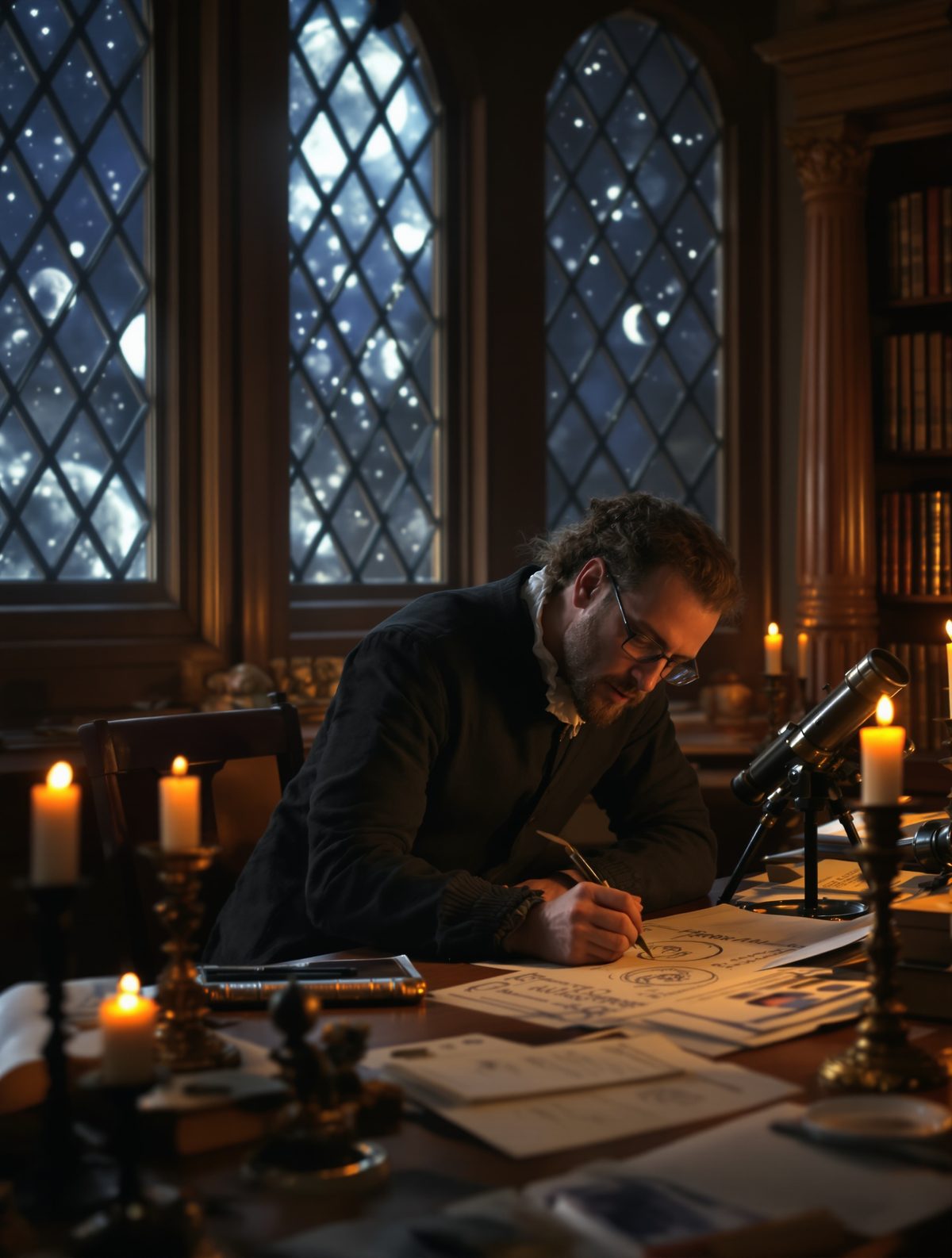
By his twenties, Wedgwood had developed an obsession that bordered on mania: perfecting ceramic glazes. While his contemporaries were content with the brown and mottled pottery that had satisfied English customers for generations, Wedgwood spent countless hours experimenting with different clay compositions, firing temperatures, and glazing techniques. His workshop notebooks, still preserved today, read like the fevered journals of an alchemist, filled with precise measurements and detailed observations about the subtle chemistry of clay transformation.
The breakthrough came in 1759 when Wedgwood perfected what he called "cream-coloured ware"—a smooth, durable earthenware with an elegant ivory finish that seemed to glow with inner light. Unlike the heavy, coarse pottery of the day, Wedgwood's creation was refined, almost porcelain-like, yet far more affordable than the Chinese ceramics that graced only the wealthiest tables. But here's what the textbooks rarely tell you: Wedgwood's genius wasn't just in the clay—it was in understanding that luxury isn't about materials, it's about perception.
The Royal Seal of Approval
When Queen Charlotte's order arrived in 1765, Wedgwood recognized it as more than just a business opportunity—it was a marketing masterstroke waiting to happen. He poured his heart and considerable skill into creating a service worthy of royalty, with each piece bearing subtle innovations that showcased his technical mastery. The cream-colored glaze was flawless, the forms elegant yet practical, and every cup, saucer, and plate bore the unmistakable mark of superior craftsmanship.
But Wedgwood's stroke of genius came in what he did after the Queen expressed her satisfaction. Rather than simply basking in royal approval, he immediately petitioned for the right to call his cream-colored ware "Queen's Ware" and to style himself "Potter to Her Majesty." In an age when royal patronage was the ultimate seal of quality, Wedgwood had essentially created the world's first celebrity endorsement.
The effect was immediate and intoxicating. Within weeks of the announcement, Wedgwood's London showroom was besieged by aristocrats desperate to own the same pottery gracing the royal table. Orders poured in from duchesses, countesses, and wealthy merchants who understood that owning Queen's Ware was about more than dining—it was about displaying their social status for all to see.
Manufacturing Desire Across Europe
What happened next reveals Wedgwood as perhaps Britain's first truly modern marketer. Rather than simply fulfilling orders as they came, he began deliberately cultivating scarcity and exclusivity. He opened a showroom in London's fashionable district, complete with elegant displays that presented his pottery not as mere household goods, but as objects of art and refinement.
Even more cleverly, Wedgwood understood that luxury was contagious. He strategically courted influential customers, offering them exclusive designs and special attention, knowing that their enthusiasm would ripple outward through their social circles. When Catherine the Great of Russia commissioned a massive 952-piece dinner service decorated with English country scenes in 1773—each piece hand-painted with a different view—the resulting publicity was worth more than any advertising campaign could have achieved.
The numbers tell the story of Wedgwood's revolutionary success. In 1759, his pottery employed fewer than a dozen workers. By 1790, his purpose-built factory village of Etruria (named after the ancient Etruscan civilization whose pottery Wedgwood admired) employed over 400 people and was producing more than 100,000 pieces annually. His pottery was being exported to every corner of Europe and across the Atlantic to America, where even George Washington counted himself among Wedgwood's customers.
The Science of Beauty
Behind all this commercial success lay a relentless commitment to innovation that modern tech companies would recognize. Wedgwood was conducting systematic experiments decades before the scientific method became standard in manufacturing. He developed a pyrometer to measure kiln temperatures with unprecedented accuracy, created detailed catalogs of clay compositions, and maintained meticulous records of every firing.
His workshop became a magnet for the era's leading scientists and intellectuals. Wedgwood corresponded with Joseph Priestley about chemical reactions, collaborated with Erasmus Darwin (Charles's grandfather) on botanical designs, and was elected to the Royal Society—an almost unheard-of honor for a mere "tradesman." This intellectual approach to pottery production allowed Wedgwood to achieve consistency and quality that his competitors, still relying on traditional methods and guesswork, simply couldn't match.
Perhaps most remarkably, Wedgwood pioneered what we would now recognize as quality control and brand management. Every piece leaving his factory was inspected, and any item not meeting his exacting standards was destroyed—literally smashed with a hammer—rather than allowed to tarnish the Wedgwood reputation. Workers reported that Wedgwood himself would patrol the workshops with his walking stick, breaking any imperfect piece he discovered while declaring, "This will not do for Josiah Wedgwood!"
Beyond the Drawing Room: A Social Revolution
The Wedgwood phenomenon represented something far more significant than successful pottery production—it marked the birth of aspirational consumption. For the first time in history, the growing middle class could afford to own objects that conveyed genuine social status. A Wedgwood tea service became the Georgian equivalent of a luxury handbag or smartphone: a visible symbol of taste, refinement, and social aspiration.
This democratization of luxury had profound social implications. Wedgwood's success helped blur the rigid class distinctions that had previously defined British society. A wealthy merchant's wife could now set a table that rivaled that of minor nobility, while the expanding professional classes—lawyers, doctors, successful tradesmen—could display their prosperity through carefully chosen domestic objects.
Wedgwood also understood that luxury was about storytelling. His jasperware, with its distinctive blue background and white relief figures depicting classical scenes, didn't just serve functional purposes—it brought mythology, history, and art into middle-class homes. Owning Wedgwood meant participating in a broader cultural conversation about taste, education, and refinement.
The Blueprint for Modern Luxury
Today, as we swipe through Instagram posts featuring carefully staged luxury goods or queue outside Apple stores for the latest product launch, we're participating in a consumer culture that Josiah Wedgwood essentially invented. His understanding that luxury is about perception rather than mere materials, that scarcity creates desire, and that celebrity endorsement can transform functional objects into status symbols, reads like a modern marketing textbook.
The Wedgwood brand survived its founder's death in 1795 and continues today, nearly three centuries later—a testament to the power of the luxury branding concept he pioneered. Every time we see a designer logo, witness a product launch event, or find ourselves wanting something not for its utility but for what it says about us, we're experiencing echoes of that transformational moment in 1765 when a Staffordshire potter realized that desire could be manufactured just as surely as clay could be fired.
In our age of global brands and influencer marketing, it's worth remembering that it all began with a man, some clay, and the revolutionary idea that ordinary objects could become extraordinary through the alchemy of aspiration. Josiah Wedgwood didn't just make pottery—he made dreams tangible, and in doing so, he showed the world how to turn craftsmanship into commerce, quality into desire, and clay into pure gold.