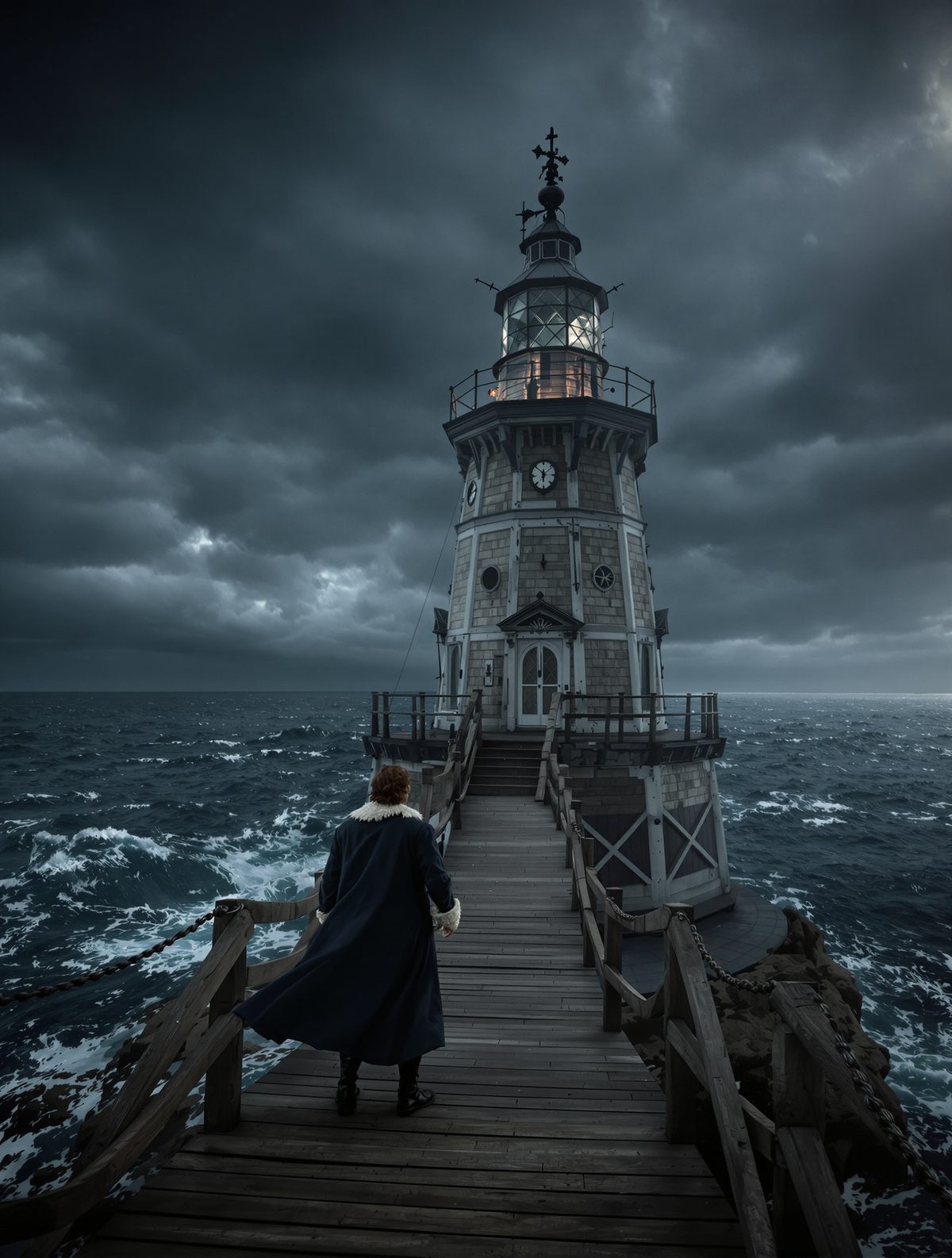
The waves crashed against the jagged teeth of Eddystone Rock with the fury of a beast denied its prey. Fourteen miles southwest of Plymouth, this treacherous outcrop of granite had earned a reputation as England's most deadly maritime graveyard. Ships' captains would whisper its name in taverns, their voices heavy with the knowledge that fifty vessels—perhaps more—had already met their doom against its unforgiving surface. But on this storm-lashed night in November 1703, something unprecedented stood defiant against the tempest: a wooden tower crowned with flickering candlelight, and inside it, a man who had staked everything on an impossible dream.
Henry Winstanley pressed his face against the salt-stained window of his lighthouse, watching the greatest storm in recorded English history tear across the English Channel. The structure groaned and swayed beneath his feet like a ship at anchor, but he refused to leave. After all, this was his moment of vindication—or his tomb.
The Madman's Vision
Henry Winstanley was never one to shy away from the impossible. By 1695, this eccentric gentleman from Essex had already made his fortune through a curious combination of property speculation and theatrical invention. His house in Littlebury was famous throughout England as a "wonder house"—a mechanical marvel filled with hidden doors, chairs that would grip unsuspecting visitors, and a bed that would catapult guests into a pond if they weren't careful. Visitors came from across Europe to experience Winstanley's ingenious contraptions, paying handsomely for the privilege of being bewildered.
But it was tragedy that drove Winstanley to his greatest challenge. In 1695, two of his merchant ships were claimed by the Eddystone Rock, their hulls torn open like paper bags against the granite fangs that lurked just beneath the surface at high tide. The financial loss was considerable, but for a man of Winstanley's temperament, the repeated defeats of human engineering by mere stone felt like a personal insult.
The Eddystone Rock presented a challenge that would have daunted the greatest engineers of the age. Rising twenty-four feet above the waves at low tide, it disappeared almost entirely when the sea was running high. The rock was constantly battered by Atlantic swells, situated in one of the busiest shipping lanes in the world, where vessels bound for Plymouth, London, and ports beyond had to navigate the treacherous waters of the Western Approaches.
Building on the Impossible
What Winstanley proposed in 1696 defied all conventional wisdom. He would build a lighthouse—not on a convenient headland or sturdy island, but directly on this wave-swept rock in the middle of the English Channel. The technical challenges seemed insurmountable: how do you transport materials to a location accessible only at low tide and in calm weather? How do you construct foundations in solid granite while waves constantly threaten to sweep away workers and equipment?
Trinity House, the organization responsible for England's lighthouses, initially refused to grant permission. The project seemed like elaborate suicide. But Winstanley's persistence, combined with his willingness to fund the project entirely from his own pocket, eventually wore down official resistance. In 1696, King William III granted him a patent for the lighthouse, along with the right to collect tolls from passing ships.
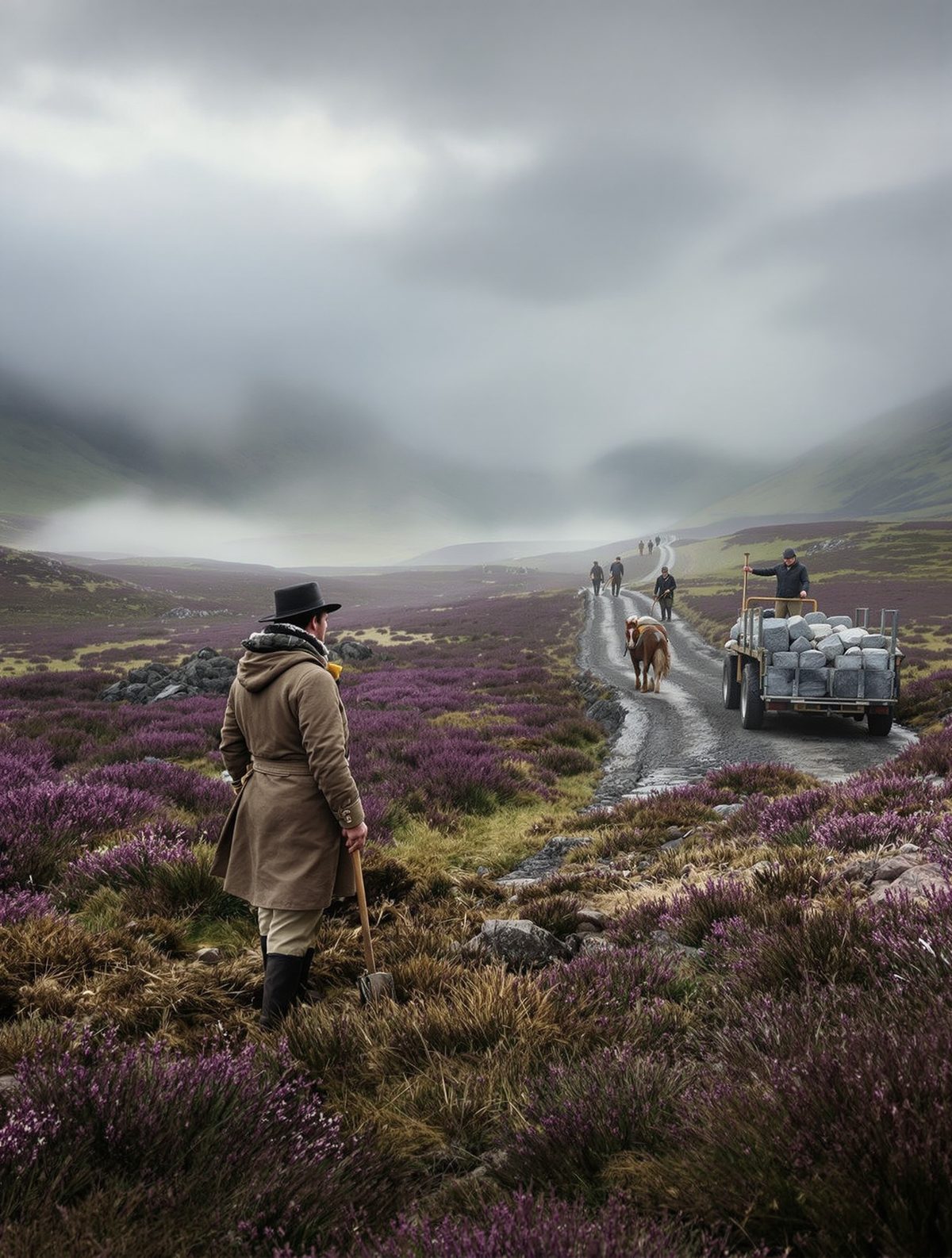
Work began that summer under conditions that would challenge even modern engineers. Winstanley could only land men and materials on the rock during a narrow window of opportunity—roughly four hours around low tide, and only when weather conditions permitted. On many days, the work gangs would set out from Plymouth only to find the rock completely submerged beneath mountainous waves, forcing them to turn back empty-handed.
The construction technique Winstanley employed was as ingenious as it was dangerous. His workers used hammers and chisels to cut twelve holes directly into the granite, each precisely shaped to receive the massive oak posts that would form the lighthouse's foundation. These holes, some cut to depths of over two feet, had to be completed between tides, with men working frantically as waves lapped at their feet and spray soaked their tools.
A Wonder of the World
By November 1698, Winstanley's impossible dream had become an extraordinary reality. The first Eddystone Lighthouse rose eighty feet above the rock, a bizarre and wonderful structure that reflected its creator's theatrical sensibilities. This wasn't merely a functional beacon—it was a monument to human defiance of natural forces.
The lighthouse resembled something from a fairy tale more than a conventional maritime aid. Winstanley had equipped his creation with a weathervane shaped like a banner, ornate carved decorations, and even a system of flags that could signal messages to passing ships. The light itself came from dozens of candles protected by glass, positioned in a lantern room that offered a commanding view of the Western Approaches.
But Winstanley's masterpiece proved vulnerable to the very forces it was designed to withstand. The winter storms of 1699 damaged the upper sections, forcing him to return the following year for extensive repairs. Rather than simply patching the damage, Winstanley decided to rebuild entirely, creating a stronger, taller structure that would better resist the Atlantic's fury.
The second lighthouse, completed in 1699, stood one hundred feet tall and incorporated lessons learned from the first winter's battering. Winstanley added external brackets and stays, strengthened the foundation connections, and increased the lighthouse's diameter to provide greater stability. The result was even more fantastical than its predecessor—visitors described it as looking like a Chinese pagoda crossed with a medieval castle, rising impossibly from the foam-covered rock.
The Ultimate Test
By 1703, Winstanley's lighthouse had guided hundreds of ships safely past the Eddystone Rock. The man who had once been dismissed as a mad dreamer was now celebrated as a visionary engineer. Maritime insurance rates for ships passing Plymouth had dropped significantly, and Winstanley was collecting healthy tolls from grateful sea captains.
But critics remained skeptical. How would this elaborate wooden tower fare against a truly severe storm? Winstanley himself had supreme confidence in his creation. He was famously quoted as saying he wished to be inside the lighthouse during "the greatest storm that ever blew under the face of the heavens, that he might see what effect it would have upon the structure."
In November 1703, he got his wish.
The Great Storm that struck southern England beginning on November 26, 1703, was the most devastating natural disaster in recorded British history. Modern meteorologists estimate that winds exceeded 120 mph—equivalent to a Category 3 hurricane. Across southern England, the tempest destroyed or damaged nearly every structure in its path. In London alone, over 2,000 chimney stacks were blown down. The Royal Navy lost thirteen warships and over 1,500 sailors. On land, an estimated 8,000 people perished.
Winstanley had traveled to his lighthouse just days before the storm struck, intending to make minor repairs and improvements before winter set in earnest. As the weather deteriorated, friends urged him to return to the mainland, but he refused. This was his opportunity to prove once and for all that human engineering could triumph over nature's worst fury.
Legacy of Light and Loss
When dawn broke on November 27, 1703, watchers on the Plymouth shore peered anxiously seaward through clearing skies. Where Winstanley's magnificent lighthouse had stood for five years, only the jagged stumps of the foundation posts remained, jutting from the Eddystone Rock like broken teeth. The lighthouse, Henry Winstanley, and two lighthouse keepers had vanished without trace, swept away by the greatest storm in English history.
The destruction was so complete that not a single piece of wreckage was ever recovered. It was as if the lighthouse had never existed, save for those twelve holes cut deep into the granite and the memories of thousands of mariners who had blessed Winstanley's light during dark Channel crossings.
Yet Winstanley's vision did not die with him. Within months of the disaster, plans were already underway for a replacement lighthouse. John Rudyard's oak and stone tower, completed in 1709, stood until destroyed by fire in 1755. It was replaced by John Smeaton's revolutionary stone lighthouse in 1759—a structure so perfectly engineered that it stood for over a century and became the template for lighthouse construction worldwide.
Today, Winstanley's story resonates as more than just a tale of individual courage and folly. In an age when we routinely attempt engineering projects that would have seemed impossible to previous generations—from offshore wind farms to space stations—his willingness to stake everything on an untested vision seems remarkably modern. He understood that progress requires someone willing to be the first to try, even when failure seems more likely than success.
The lights that guide today's mariners past the Eddystone Rock shine in direct descent from Henry Winstanley's impossible dream. His lighthouse lasted only five years, but his legacy illuminates the channel still.