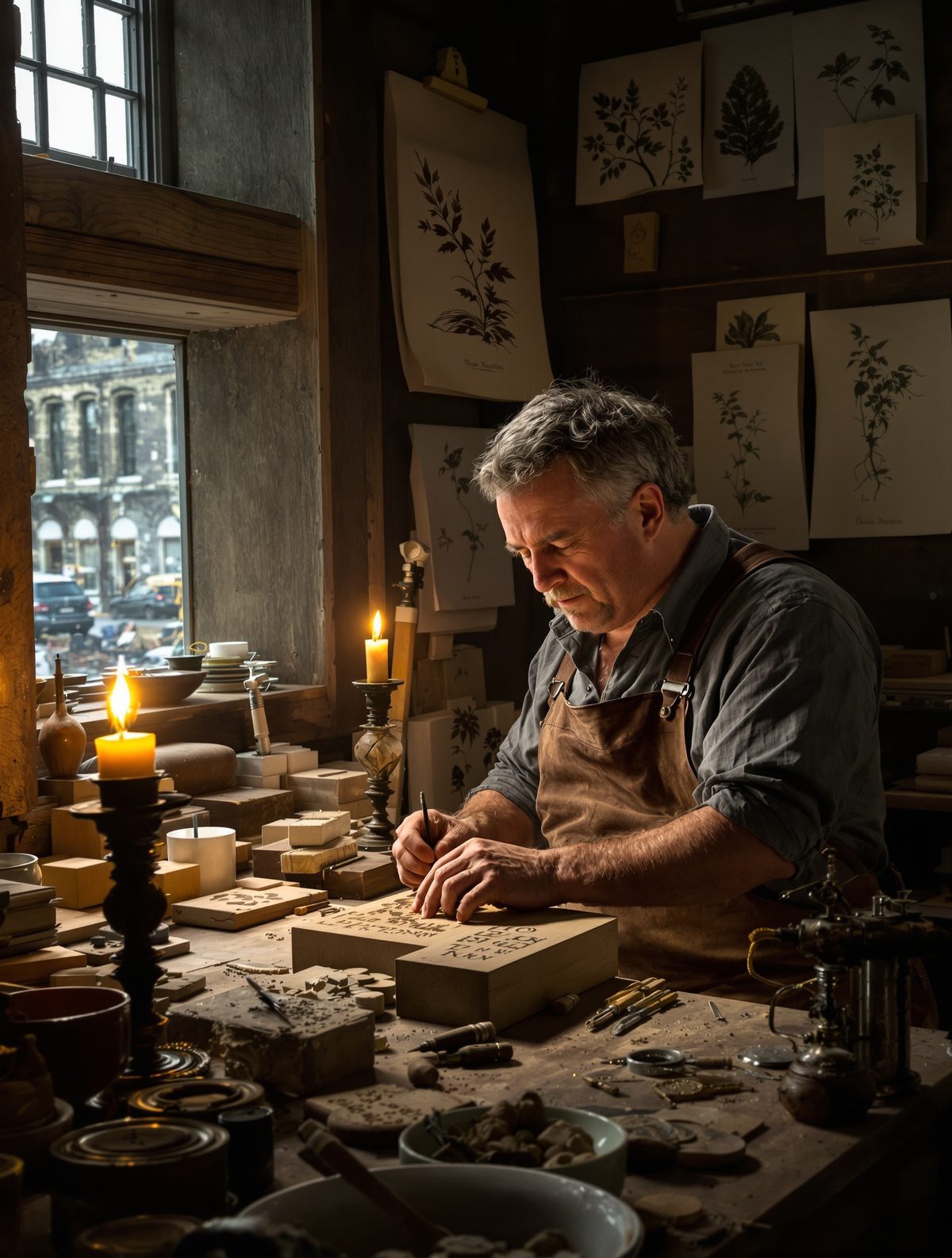
The acrid smell of lamp oil mixed with wood shavings filled the cramped Newcastle workshop as Thomas Bewick bent over his workbench, squinting in the flickering candlelight. It was well past midnight on a bitter February evening in 1790, but the 37-year-old engraver couldn't tear himself away from the tiny block of boxwood clenched in his calloused hands. With surgical precision, he carved away slivers no thicker than a human hair, each cut bringing him closer to perfecting a technique that had been lost to the world for three centuries. What Bewick didn't realize as he worked through the night was that he was about to trigger a revolution that would democratize knowledge across the British Empire and beyond.
The Art That Time Forgot
Wood engraving had once been the pride of medieval craftsmen, capable of producing intricate illustrations that could withstand thousands of printing impressions. But by the 16th century, the technique had been abandoned in favor of copper plate engraving, which produced more refined images but at a devastating cost—copper plates wore out quickly, limiting print runs and making illustrated books luxuries only the wealthy could afford.
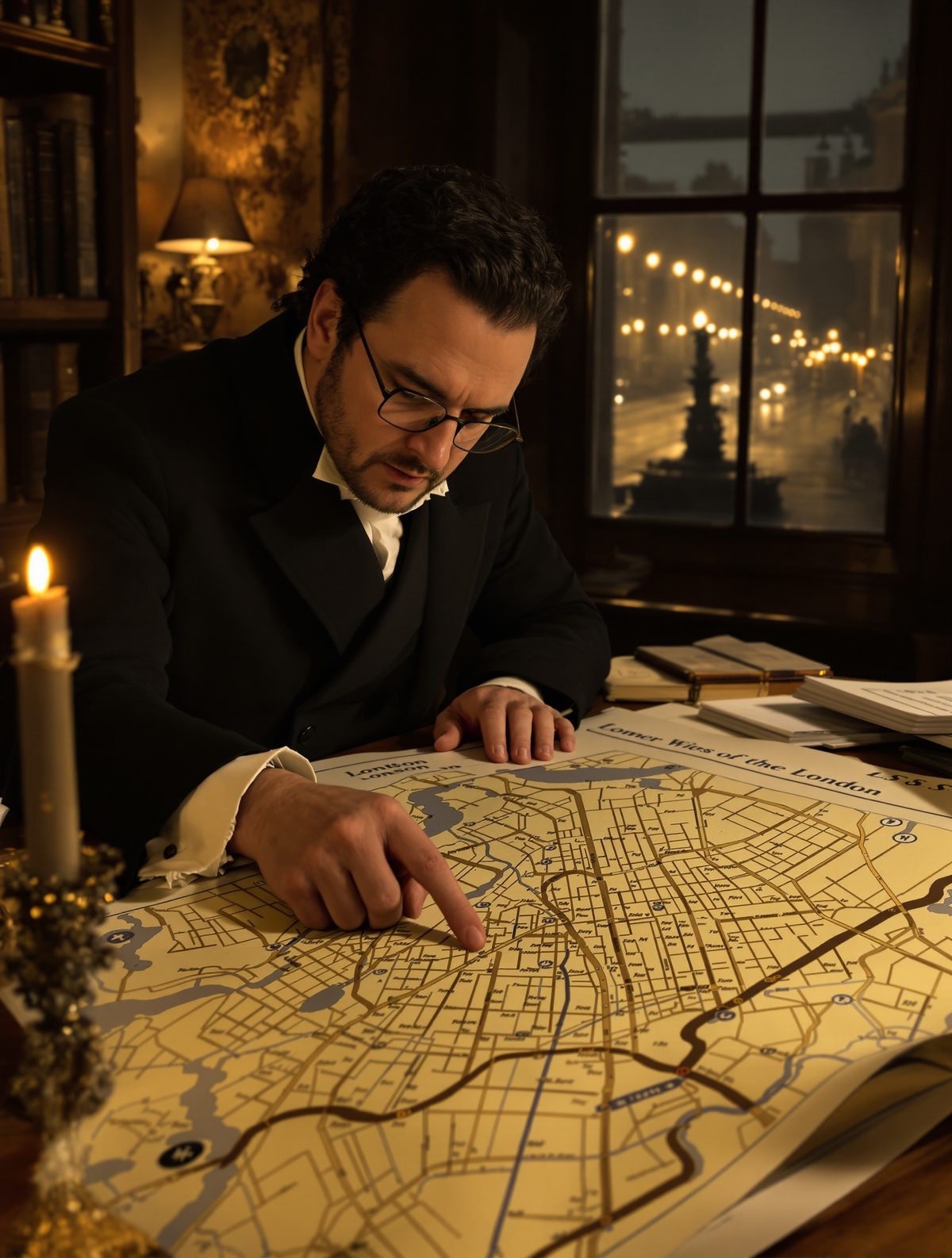
For nearly 300 years, Britain's publishers faced an impossible choice: beautiful illustrations with tiny print runs, or mass production without visual appeal. Books remained largely text-only affairs, their knowledge locked away from the growing literate population who yearned for visual learning. Maps were crude, scientific diagrams were prohibitively expensive to reproduce, and children's books—when they existed at all—were sparse, dull affairs.
Bewick had grown up in the Northumberland countryside near Cherryburn, where his father worked as a tenant farmer. As a boy, he'd spent countless hours studying the intricate patterns on birds' feathers, the texture of tree bark, the delicate veining of leaves. This obsessive attention to natural detail would later become his signature, but first he had to master the tools of his trade during a grueling seven-year apprenticeship with Newcastle engraver Ralph Beilby.
The Midnight Breakthrough
The key to Bewick's revolution lay in a deceptively simple change of approach. Traditional woodcut artists carved with the grain, slicing along the wood's natural lines. This made for quick work but crude results—fine details were impossible, and the blocks wore out after just a few hundred impressions. Bewick turned convention on its head, literally. He began carving across the end grain of boxwood, the hardest timber he could find, using tools more suited to a jeweler than a traditional woodworker.
The technique was fiendishly difficult. End-grain cutting required incredible skill and patience—one slip could ruin weeks of work. The boxwood had to be perfectly seasoned, cut into blocks exactly 0.918 inches high (the standard "type height" used by printers), and polished to mirror smoothness. Bewick's tools were equally specialized: gravers with tips measured in fractions of millimeters, each one hand-forged and sharpened to surgical precision.
But the results were miraculous. Where copper engravings might survive 500 impressions before becoming unusably worn, Bewick's end-grain blocks could print 100,000 copies or more while retaining razor-sharp detail. More importantly for cash-strapped publishers, his blocks were the same height as metal type, meaning they could be locked directly into the printing frame alongside text—no separate printing process required.
A Natural History of Revolution
Bewick's first masterpiece was "A General History of Quadrupeds," published in 1790. The book was an immediate sensation, not just for its scientific content but for its unprecedented visual quality. Each animal was rendered with photographic precision—every whisker on a fox's snout, every scale on a fish's flank, every feather in an eagle's wing captured in exquisite detail.
But it was the "tailpieces"—small decorative engravings at the end of each chapter—that truly showcased Bewick's genius. These tiny vignettes, often no larger than a postage stamp, contained entire worlds of rural British life. A poacher fleeing with a stolen sheep, children skating on a frozen pond, an old woman feeding chickens in a farmyard—each scene was a masterpiece of storytelling compressed into a few square inches of carved boxwood.
The book's success was staggering. Within months, it had sold more copies than most illustrated books managed in a decade. Publishers across Britain took notice, and orders began flooding into Bewick's Newcastle workshop. His follow-up work, "A History of British Birds," published in two volumes between 1797 and 1804, cemented his reputation as the finest engraver in Europe. The ornithological accuracy was so precise that modern bird-watchers still use his illustrations for identification.
The Workshop That Changed the World
Bewick's success created an entirely new industry. His workshop on St. Nicholas Street became a mecca for aspiring engravers from across Europe. Students would travel hundreds of miles for the chance to apprentice under the master, learning not just his techniques but his revolutionary approach to visual storytelling. The workshop operated like a medieval guild—apprentices started by preparing wood blocks and sharpening tools, gradually working their way up to cutting simple patterns, then finally to creating their own original designs.
The economic impact was immediate and transformative. Publishers who had previously limited their illustrated editions to a few hundred copies could now print thousands. The cost of producing visual materials plummeted, making maps, scientific diagrams, and illustrated books accessible to Britain's rapidly expanding middle class. Navigation charts for the Royal Navy, botanical illustrations for agricultural manuals, anatomical drawings for medical textbooks—all became cheaper and more widely available thanks to Bewick's technique.
Perhaps most importantly, his method revolutionized children's publishing. For the first time, illustrated children's books could be produced affordably in large quantities. Publishers like John Newbery, who had pioneered the children's book market, could now include detailed pictures alongside their stories. Literacy rates, already climbing due to industrialization and urbanization, received another boost as visual learning materials became widely available.
The Empire of Images
By 1820, Bewick's technique had spread across the British Empire and beyond. Publishing houses in Edinburgh, Dublin, London, and colonial cities from Sydney to Bombay were employing wood engravers trained in the Newcastle method. The British advantage in illustrated publishing became so pronounced that other European nations began importing British-made blocks rather than attempting to compete.
The technique proved particularly valuable for newspaper and magazine publishing. Before Bewick, periodicals were almost entirely text-based affairs. Afterward, publications like the Illustrated London News (founded in 1842) could include detailed illustrations of current events, bringing distant wars, royal ceremonies, and natural disasters into British homes with unprecedented immediacy and visual impact.
The speed of production was remarkable. A skilled engraver working in Bewick's style could complete a complex illustration in a few days, compared to the weeks required for comparable copper plate work. This meant newspapers could illustrate breaking news, publishers could respond quickly to market demands, and the entire pace of visual communication accelerated dramatically.
The Revolution's Living Legacy
Thomas Bewick died in 1828, but his revolution continued long after his death. Wood engraving remained the dominant method for mass-produced illustrations until the 1880s, when photographic reproduction techniques finally displaced it. For nearly a century, virtually every illustrated book, magazine, or newspaper in the English-speaking world relied on techniques perfected in that cramped Newcastle workshop.
Today, in our age of digital images and instant visual communication, it's easy to forget how revolutionary Bewick's achievement truly was. He didn't just improve an existing technique—he solved a fundamental problem that had plagued human communication for centuries: how to combine high-quality images with mass production. His solution democratized visual knowledge, making scientific understanding, geographic awareness, and cultural literacy accessible to ordinary people for the first time in history.
The next time you scroll through an endless feed of images on your smartphone, spare a thought for Thomas Bewick. In many ways, our modern visual culture—where information and entertainment seamlessly blend text and image—traces its roots back to that February night in 1790 when a Newcastle craftsman carved the future into a block of boxwood, one hair-thin cut at a time.